
Blog
DIY Book Nook Kit 2026: Best Guide to Choose the Right One

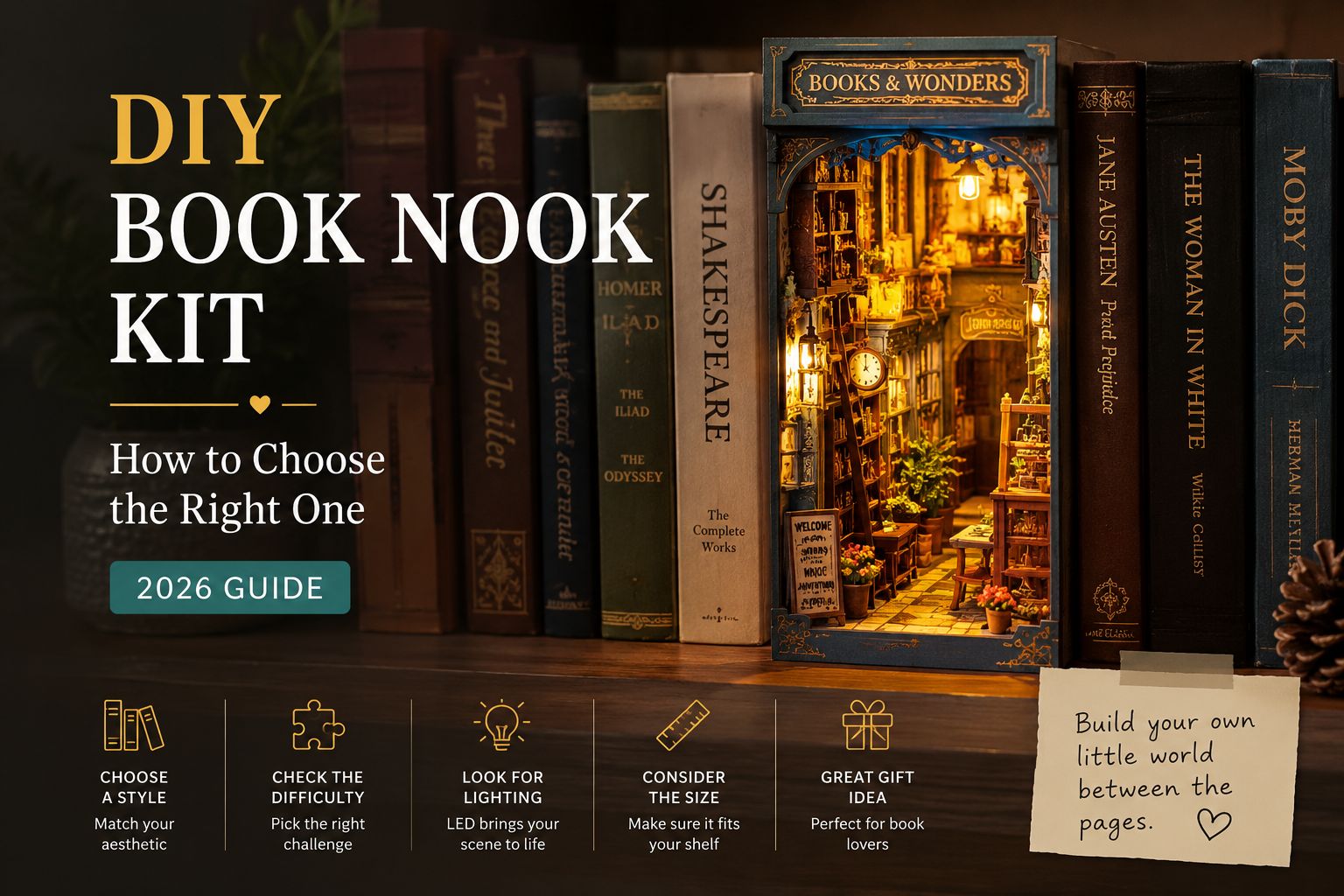
DIY Book Nook Kit 2026: Best Guide to Choose the Right One
A DIY book nook kit is one of the easiest ways to create a miniature world for your bookshelf without designing everything from scratch. Instead of starting with loose materials, measurements, and separate accessories, a kit gives you the main structure, decorative pieces, and instructions needed to build a small shelf insert that fits between books.
The appeal is simple. You get a creative project to assemble and a finished piece of bookshelf decor to display. A good design can look like a tiny library, a cozy café, a Japanese street, a flower shop, a cabin, or a glowing alley hidden between books. It adds depth to your shelf and makes the space feel more personal.
Choosing the right kit matters, especially if this is your first miniature project. Some designs are simple and relaxing, while others include many tiny pieces, LED wiring, layered walls, and detailed accessories. This guide explains how to compare styles, difficulty levels, lighting options, materials, size, and display value before buying.
If you already want to compare available designs, you can browse our full collection and choose a kit that matches your shelf, your style, and your experience level.
How to Choose a DIY Book Nook Kit
Choosing a DIY book nook kit should start with one question: what kind of final display do you want on your shelf? The answer will guide every other decision, including theme, difficulty, size, lighting, and budget.
Some people want a calm reading-room style that blends naturally with books. Others want a colorful miniature street or a bright design that becomes the main decorative feature of the shelf. There is no single best option for everyone. The right kit is the one that fits both your taste and your patience level.
A beginner should usually start with a design that has a clear frame, stable walls, and simple decorative elements. Advanced kits can be beautiful, but they may include tiny accessories, complex lighting, or long assembly steps. A first project should feel enjoyable, not overwhelming.
It also helps to think about where the finished piece will go. A kit for a bedroom shelf may need a softer style. A home office shelf may look better with a library, bookstore, or classic wooden design. A living room display can handle something more eye-catching, such as a Japanese street or a lighted miniature alley.
Before buying, check the product details carefully. Look for dimensions, included materials, estimated assembly time, lighting information, and recommended skill level. These details can prevent disappointment and help you choose a kit that fits your expectations.
Choose the Right DIY Book Nook Kit Style
The theme is usually the first thing people notice. A book nook is not only a craft project; it is also a decorative scene. That means the style should match the mood you want to create.
Library and bookstore designs are classic choices. They connect naturally with books and usually look elegant on most shelves. These kits often include tiny bookshelves, reading chairs, lamps, tables, and warm interior details. If you want something timeless, this is a safe direction.
Café and coffee shop scenes feel warmer and more relaxed. They may include small tables, chairs, windows, plants, and soft lighting. A café-style kit can work well in a bedroom, reading corner, or office because it creates a welcoming atmosphere.
Japanese street designs are more visual and dramatic. They often include lanterns, shop fronts, signs, sakura details, or narrow street layouts. These kits can look impressive in photos and may work well for people who want a more artistic shelf display.
Cabin, garden, and flower shop themes can feel softer. They are good choices for home decor because they add warmth, color, and charm without looking too heavy. These styles also work well as gifts because they feel friendly and easy to appreciate.
Fantasy and magical alley designs can be attractive, but choose them carefully. A design can feel mysterious or story-inspired without using copyrighted characters or brand names. Original fantasy themes are safer and often look more refined.
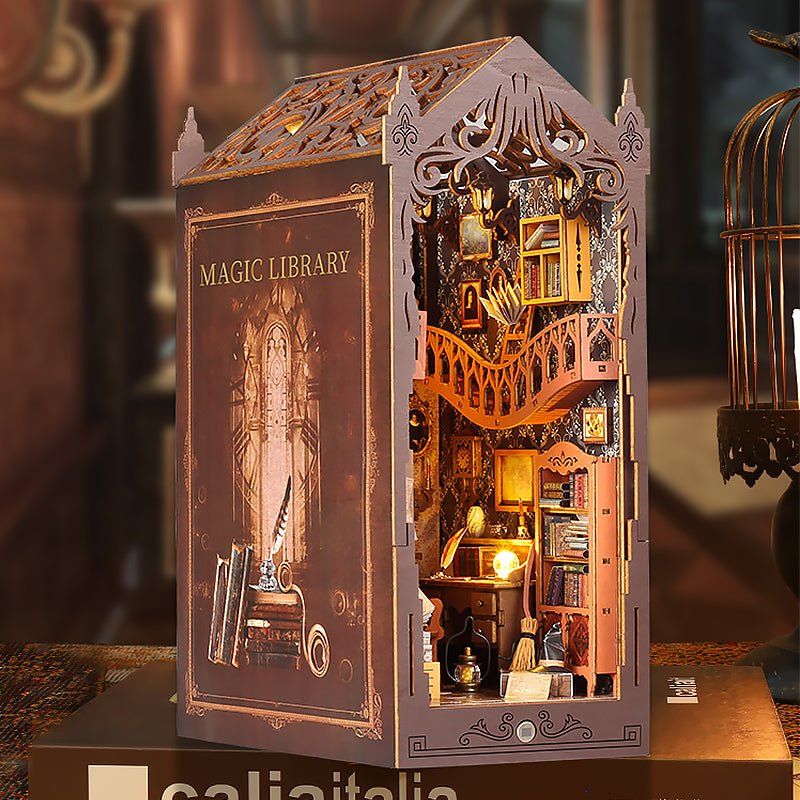
Magic Library DIY Book Nook
This design is a strong choice if you want a DIY book nook kit with a classic library feel. Its warm details, cozy miniature shelves, and display-ready style make it a good option for beginners, book lovers, and anyone creating a charming bookshelf scene.
Check the Difficulty Level of Your DIY Book Nook Kit
Difficulty is one of the most important factors when choosing a kit. A design may look beautiful in the product photo, but if it has too many tiny parts or unclear steps, the building process can become frustrating.
Beginner-friendly kits usually have fewer delicate pieces, a clear structure, and step-by-step instructions. They may still look detailed, but the assembly process is easier to follow. A good beginner kit should help you understand the basics of miniature building without requiring advanced tools or techniques.
Intermediate kits often include more accessories, LED lights, layered decor, and smaller parts. These are good for people who already enjoy hands-on projects or have completed one kit before. They can produce a more impressive final result, but they also require more patience.
Advanced kits may involve many decorative layers, complex lighting, fragile pieces, and longer assembly times. They can be rewarding, but they are not always the best choice for a first build.
Beginner-Friendly Features to Look For
Look for a stable frame, clear wall panels, labeled parts, and simple furniture pieces. These features make assembly easier and help the final structure stay clean.
Instructions also matter. A kit with visual guidance, numbered steps, and clear diagrams will be much easier to complete than one with vague directions. If reviews mention confusing instructions, consider a simpler option.
You should also check whether the product requires extra tools. Some kits include most of what you need, while others may require glue, tweezers, batteries, or craft tools. If this is your first project, a kit with included accessories and simple requirements is usually better.
Decide Whether a Lighted Book Nook Kit Is Right for You
Lighting can completely change the final look of a book nook. Warm LED lights make the miniature scene feel more realistic, especially in the evening. They can highlight windows, shelves, lamps, street signs, or interior details.
A lighted DIY book nook kit often looks more premium because the glow adds depth. This is one reason LED designs are popular for gifts and home decor. A simple scene can look much more impressive when it has soft lighting inside.
However, lighting also adds one more assembly step. You may need to place wires carefully, connect small parts, or test the light before closing the structure. This is not always difficult, but it requires attention.
If you are a beginner, choose a kit where the lighting system looks simple. Avoid designs where the wiring appears complicated or where many small LED points need to be placed separately. Clear instructions are especially important for lighted kits.
When LED Designs Are Worth It
LED designs are worth considering if you want the final piece to stand out on the shelf. They work particularly well for library scenes, cafés, Japanese streets, fantasy alleys, and cozy rooms.
They are also strong gift options. A lighted scene feels more complete and decorative when displayed. If the recipient enjoys cozy home decor, warm lighting can make the kit feel more special.
Still, not every kit needs lights. A flower shop, cabin, or simple reading room can look attractive without LEDs if the design and colors are strong. Choose lighting because it improves the scene, not just because it is included.
Think About Size and Shelf Space
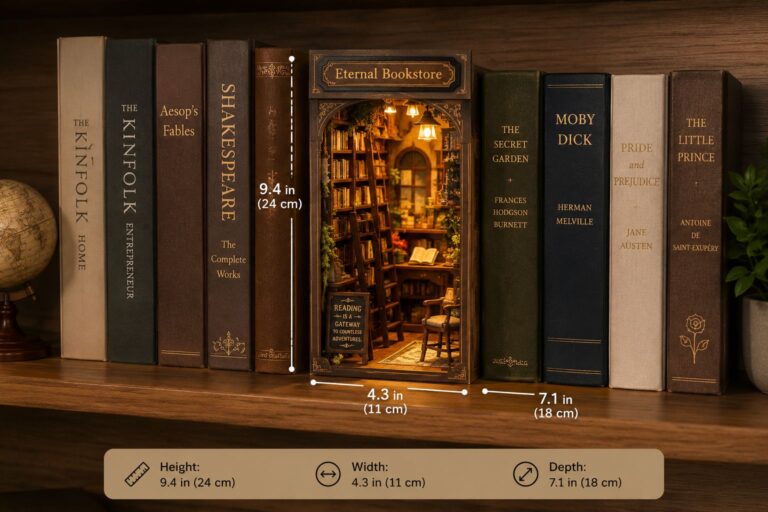
Size is easy to overlook, but it can affect the final display more than people expect. A book nook should fit comfortably between books or on a shelf without looking too large or too small.
Before buying, measure your shelf height, depth, and width. Then compare those measurements with the product dimensions. A kit may look perfect in photos but feel awkward if it does not match your shelf.
Some designs are tall and narrow, which makes them ideal for placing between books. Others are wider or shaped more like small houses, which may need more open shelf space. Cabin-style or room-style kits can sometimes require extra width.
Depth also matters. A deep book nook may not fit on a shallow shelf. If the product sticks out too far, it can look unbalanced or be easier to knock over.
A good shelf display should feel integrated. The kit should sit naturally with the surrounding books, not appear forced. If your books are mostly tall hardcovers, choose a kit with enough height. If your shelf is smaller, choose a compact design.
Compare Materials and Build Quality
Materials affect both the assembly process and the final look. Many kits use pre-cut wooden pieces, printed paper, acrylic parts, small accessories, and LED components. The quality of these materials can change the overall experience.
Wooden pieces usually give a stronger and more premium feel. They help the structure stay stable and make the final scene look more solid. Printed details can add realism, but they should be clean and well-aligned.
Small accessories can make a scene more charming, but too many low-quality details can make it look cluttered. A balanced design is often better than a design that includes many tiny objects without a clear visual focus.
If the product includes transparent windows, lamps, or signs, check whether the photos show them clearly. These details can add value, but they should look neat.
Glue and fitting are also important. Some kits require careful alignment. If the cuts are not accurate, assembly becomes harder. Reviews can help you understand whether the kit fits together smoothly.
A quality kit should feel thoughtful. The scene should have a clear theme, a stable structure, and details that support the design rather than overwhelm it.
Match the Kit to the Person Building It
A book nook kit for yourself may not be the same as one you would choose as a gift. Personal taste, patience, and experience level matter.
If you are buying for yourself, choose the style that you genuinely want to display. Do not choose a design only because it is popular. The building process takes time, so the theme should feel interesting to you.
If you are buying for someone else, think about their personality. A reader may enjoy a library or bookstore design. Someone who likes soft decor may prefer a flower shop or cozy room. A person who enjoys travel-inspired designs may like a Japanese street scene.
Age and experience also matter. For adults who enjoy crafts, a more detailed design may be fine. For someone who is new to DIY projects, a simpler kit is safer.
A DIY book nook kit can be a strong gift because it offers both an activity and a finished display. The recipient can build it, keep it, and use it as decor. This makes it more personal than a standard decorative object.
If you want extra help choosing a first project, read our beginner-friendly guide before selecting a design.
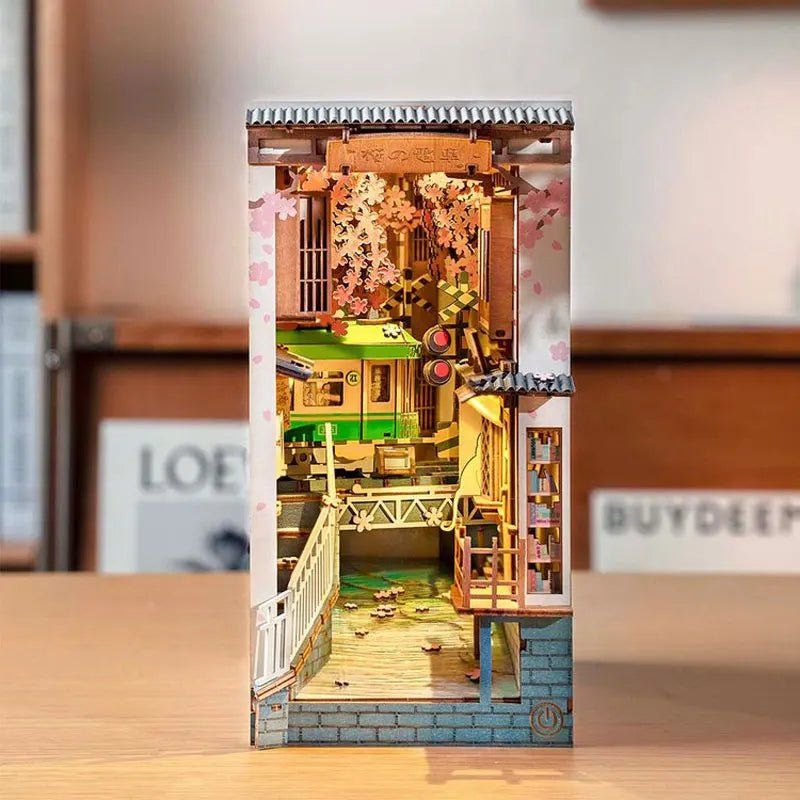
Sakura Densya TGB01 Book Nook
This design is a great choice if you want a DIY book nook kit with strong visual appeal. Its detailed miniature scene, warm atmosphere, and decorative finish make it ideal for cozy shelves, creative gifts, and eye-catching bookshelf decor.
Look at the Final Display Value
The final display is the reason many people buy these kits. The project should be enjoyable to build, but it should also look good after assembly.
A strong display has a clear focal point. This might be a glowing doorway, a tiny reading chair, a shop window, a staircase, or a cozy lamp. The viewer should immediately understand where to look.
Color balance also matters. Warm wood tones create a classic library feel. Soft pinks and greens work well for floral or garden designs. Darker colors with warm lights can make a fantasy or street scene feel more dramatic.
A clean frame helps the kit look finished. Some designs have ornate borders, arches, or book-shaped sides that make the piece blend between books. Others look more like miniature rooms and may need open shelf space.
Think about how the scene will look from a normal viewing distance. Very tiny details are charming, but the overall shape, lighting, and color are what people notice first.
If a kit looks good only in close-up photos, it may not be the best display piece. Choose a design that has both detailed craftsmanship and a strong overall silhouette.
Compare Price and Value
Price should not be judged only by the size of the kit. A smaller design with better materials, lighting, and clear instructions can offer better value than a larger but poorly made kit.
When comparing prices, look at what is included. Does the kit include LED lights? Are the pieces pre-cut? Are accessories included? Does it come with clear instructions? Will you need extra tools?
A more expensive kit may be worth it if the final display looks premium and the assembly process is smoother. On the other hand, a simple affordable kit can be a good first project if it helps you learn without pressure.
For gifts, perceived value matters. A kit with good packaging, attractive photos, and a clear theme can feel more thoughtful. For personal use, value depends more on whether you enjoy the design and want to display it.
Avoid choosing only the cheapest option. If the materials are weak or the instructions are unclear, the experience may be disappointing. The best value is usually a balance of price, quality, design, and ease of assembly.
Best Styles for a First DIY Book Nook Kit
Some styles are better suited for first-time builders. They are usually easier to understand, easier to display, and less likely to feel overwhelming.
Library and Reading Room Designs
Library and reading room designs are ideal for beginners. Their structure is familiar, and the final display fits naturally between books. These kits often include shelves, lamps, chairs, and small reading details.
They also tend to look elegant without needing too many complicated accessories. A simple library scene can still feel complete and premium.
Café and Bookstore Designs
Café and bookstore scenes are warm, giftable, and visually friendly. They work well for people who enjoy cozy spaces and soft lighting.
These designs can include many details, so choose one with a clean layout if you are new to miniature projects.
Japanese Street Scenes
Japanese street designs are visually powerful. They are good for people who want a more artistic display, especially if the kit includes lanterns or warm lights.
For beginners, choose a moderate design with a simple frame and clear instructions.
Cabin and Garden Themes
Cabin and garden themes can feel calm and decorative. They often work well as gifts because the style is approachable.
A cabin design can suit cozy interiors, while garden and flower shop scenes add a softer decorative touch.
Common Mistakes to Avoid
Many buying mistakes are easy to avoid if you know what to check before ordering.
The first mistake is choosing a kit only because the photo looks impressive. Product photos are important, but they do not always show the assembly difficulty. Read the details and check whether the design matches your experience level.
Another mistake is ignoring the dimensions. A beautiful kit is not useful if it does not fit your shelf. Always check height, width, and depth before buying.
Some buyers also forget to check what is included. A kit may require glue, batteries, or tools that are not part of the package. This is not necessarily a problem, but you should know before starting.
Rushing the build is another common issue. Miniature projects need patience. If you move too fast, small pieces may not align correctly, and glue can become messy.
Finally, avoid choosing a highly detailed advanced kit as your first project unless you already enjoy careful craft work. Starting with something manageable gives you a better experience and more confidence.
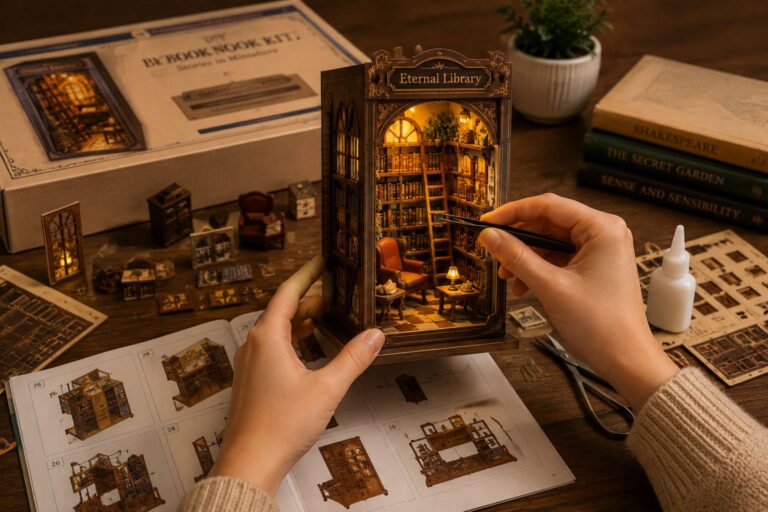
DIY Book Nook Kit vs Building From Scratch
Some people wonder whether they should buy a kit or build a book nook from scratch. Both options can be enjoyable, but they serve different needs.
A kit is better if you want structure, convenience, and a clear final result. You do not need to plan measurements, source every material, or design the layout yourself. This makes the process much easier for beginners.
Building from scratch gives you more creative freedom. You can choose every detail, from the walls and lighting to the furniture and accessories. However, it also requires more planning, tools, and time.
A DIY book nook kit is usually the better choice if you want a reliable first project. It helps you learn how miniature scenes are built while still giving you a polished final display.
Once you complete one or two kits, you may feel more confident customizing future projects. You can add extra accessories, change colors, or adjust small details to make the scene more personal.
For most buyers, starting with a kit is the practical choice. It gives guidance without removing the creative experience.
Helpful Resources Before You Buy
Before choosing a kit, it is useful to compare different styles and understand what each design offers. You can look at themes, difficulty, lighting, and final display value.
For broader style inspiration, read our creative inspiration guide. It shows different shelf display ideas, including libraries, cafés, Japanese street scenes, fantasy alleys, and flower shop themes.
For a complete overview of book nook styles, assembly tips, and buying advice, you can also read our complete DIY guide.
Many people enjoy DIY craft projects because they combine creativity, focus, and a finished object that can be displayed at home.
These resources can help you move from inspiration to a clear buying decision. Instead of choosing randomly, you can select a design that fits your shelf and your skill level.
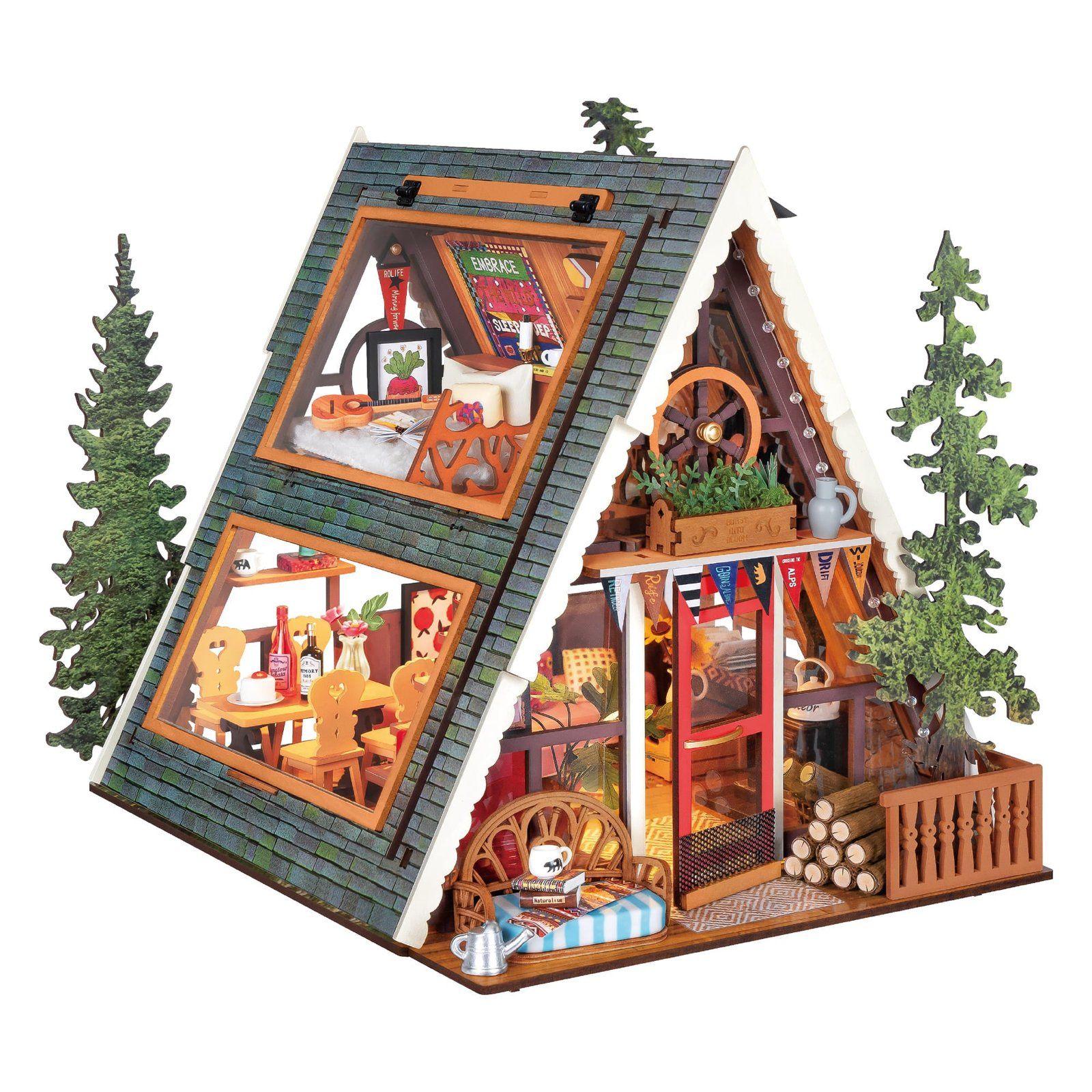
PRODUCT NAME HERE
This kit is a versatile choice if you want a design that works well for gifts, home decor, and beginner-friendly DIY projects. Its cozy miniature style, clear display shape, and warm shelf-ready look make it easy to enjoy whether you are buying it for yourself or choosing it as a creative gift.
Ready to Choose Your DIY Book Nook Kit?
Explore cozy shelf inserts, lighted miniature scenes, and creative book nook kits made for relaxing DIY projects, thoughtful gifts, and beautiful bookshelf decor.
Explore More Book Nook KitsFrequently Asked Questions
What is a DIY book nook kit?
A DIY book nook kit is a miniature shelf insert that you assemble yourself. It usually includes pre-cut pieces, decorative details, and instructions to help you build a small scene that fits between books.
Is a DIY book nook kit good for beginners?
Yes, many kits are suitable for beginners, especially designs with clear instructions, stable frames, and manageable details. Beginners should avoid overly complex kits for their first project.
How do I choose the right book nook kit?
Choose based on style, size, difficulty, lighting, materials, and where you want to display the finished piece. The best kit should match your shelf and your experience level.
Do book nook kits include LED lights?
Some kits include LED lights, while others do not. Lighted kits can look more premium, but they may require extra care during assembly.
How long does it take to build one?
Assembly time depends on the design. Simple kits may take a few hours, while detailed designs can take several sessions. It is better to build slowly and follow the instructions carefully.
Are book nook kits good gifts?
Yes, they can make excellent gifts for book lovers, craft fans, and people who enjoy cozy home decor. Choose a beginner-friendly design if the recipient is new to DIY projects.
Final Thoughts
Choosing the right kit is about more than picking the prettiest image. A good design should match your style, fit your shelf, suit your skill level, and give you a finished scene you will enjoy displaying.
A DIY book nook kit can be a relaxing project, a decorative object, and a thoughtful gift at the same time. Whether you prefer a cozy library, a miniature café, a Sakura-inspired street, a cabin scene, or a flower shop, the best choice is the one that feels both enjoyable to build and beautiful to keep.
Start with a design that feels realistic for your experience level. Check the size, lighting, instructions, and materials before buying. A clear, well-made kit will make the process smoother and the final result more satisfying.
Once your first project is complete, you can explore more detailed scenes, different styles, and creative shelf displays. Over time, your bookshelf can become a small collection of miniature worlds, each with its own atmosphere and story.
2 thoughts on “DIY Book Nook Kit 2026: Best Guide to Choose the Right One”